Views: 167 Author: Site Editor Publish Time: 2026-04-20 Origin: Site
The vaping industry in 2026 looks very different from the market many brands knew just a few years ago. This is no longer a category driven mainly by novelty, fast launches, and short product cycles. Today, the conversation is more disciplined. Regulation is tighter, disposable formats are under pressure, adult-user expectations are more refined, and E-liquid development is increasingly tied to hardware performance, compliance, and long-term product value. In the UK, the single-use vape ban took effect in June 2025, while the U.S. continues to narrow the legal market through authorization rules and new guidance on flavored products. At the same time, survey data still shows strong adult demand, stable flavor preferences, and a market that is maturing rather than disappearing. For brands, distributors, and buyers, 2026 is the year to stop chasing noise and start reading the structure of the market more carefully.
One of the clearest vaping trends in 2026 is that the market is moving from expansion at any cost to measured, evidence-based growth. In Great Britain, adult vaping reached 10.4% in 2025, or about 5.5 million people, while growth slowed after 2024, suggesting a plateau rather than a collapse. The same ASH data also notes that disposable vape use peaked in 2023 and is now declining. In the U.S., current youth e-cigarette use fell from 7.7% in 2023 to 5.9% in 2024, which changes the public conversation but does not remove regulatory pressure.
That matters because a mature market rewards brands that can prove consistency. In 2026, buyers are less impressed by one-hit flavors or flashy packaging alone. They are paying more attention to whether an E-liquid line has stable sensory quality, sensible nicotine options, reliable fill behavior, and documentation that can survive real scrutiny.
The biggest structural shift in the vaping market 2026 may be the return of refillable logic. In the UK, from 1 June 2025, single-use vapes were banned, and ASH notes that products legally sold thereafter must be rechargeable, refillable, and fitted with a coil that can be replaced. That is not just a hardware story. It is also a major E-liquid story, because refillable ecosystems naturally increase the importance of bottled liquid, pod compatibility, leak resistance, and repeat flavor experience.
For E-liquid brands, this shift changes the product brief:
· Repeat purchase matters more than impulse purchase
· Flavor fatigue becomes a real retention issue
· Coil friendliness and viscosity become commercial factors
· Packaging and refill convenience affect loyalty
The table below summarizes how the major trends are reshaping product decisions in 2026. It synthesizes current regulatory, survey, and sustainability signals from the UK, U.S., and EU.
Trend | What is changing in 2026 | What it means for E-liquid |
Refillable growth | Reusable systems are gaining policy and retail relevance | Better bottle design, stable viscosity, stronger repeat-use flavors |
Compliance-first market | Documentation and lawful market access matter more | Formulation traceability and market-specific specs become essential |
Smarter flavor planning | Brands are reducing random SKU expansion | More disciplined flavor families and clearer adult positioning |
Sustainability pressure | Battery and waste rules are tightening | Refill ecosystems and lower-waste packaging gain importance |
User retention focus | Mature users expect consistency, not just novelty | Smooth throat feel, reliable nicotine delivery, and coil performance matter more |
In 2026, compliance is no longer something handled after formulation. It is part of formulation. The FDA’s current public list says there are 41 e-cigarettes authorized by the agency and that these are the only e-cigarettes that may be lawfully sold in the United States. In March 2026, FDA also published draft guidance specifically on flavored ENDS premarket applications, emphasizing that regulators are weighing adult benefit against youth initiation risk in a more detailed, product-specific way.
This matters for manufacturers and brand owners because “good product” now means more than taste and vapor production. It means a product line that can support ingredient transparency, nicotine accuracy, batch stability, label discipline, and market-specific paperwork. In other words, compliance has become one of the features buyers evaluate, even when they do not call it a feature.
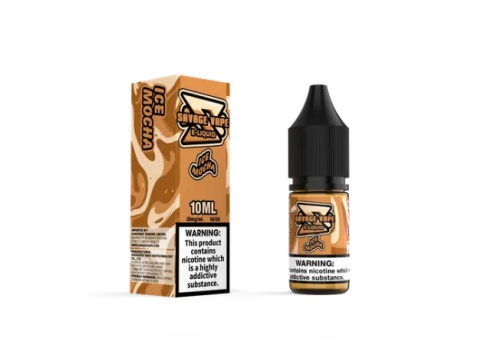
Flavor is still one of the most important drivers in vaping, but the way successful companies approach flavor is changing. ASH’s 2025 adult survey found that fruit was the top flavor preference among adult vapers in Great Britain at 51%, followed by menthol or mint at 20% and tobacco at 11%. The same survey found that 41% of adult vapers sometimes or always use “ice” flavors. That tells us the flavored E-liquid segment is still powerful, but it is also becoming more segmented and more deliberate.
Brands are learning that adding dozens of vague, overlapping SKUs does not necessarily create stronger shelf power. In a more disciplined market, flavor menus need clear logic: fruit, beverage, mint, tobacco, dessert, and premium blends that can be understood quickly by retailers and end users.
In practical product development, 2026 favors flavors that feel complete without becoming heavy. That often means better top-note control, less over-sweetness, cleaner cooling effects, and profiles that remain pleasant across repeated daily use. For refillable devices especially, longevity matters more than the first puff.
At the same time, the regulatory environment around flavor is becoming sharper. FDA’s 2026 draft guidance explicitly points to youth-risk concerns associated with certain flavored ENDS products, especially fruit and sweet profiles, while also acknowledging that non-tobacco flavors may in some circumstances help adults who smoke switch away from combusted cigarettes. That tension is exactly why flavored E-liquid strategy in 2026 has to be more careful, more adult-oriented, and more evidence-aware than before.
A strong E-liquid in 2026 cannot be judged in isolation. It has to be judged in the device it is actually used in. That sounds obvious, but the industry spent years treating liquid and hardware as separate conversations. The market is now correcting that habit.
For buyers and OEM/ODM partners, the better question is no longer, “Does this flavor test well?” It is, “Does this E-liquid stay stable in this pod system, on this coil structure, at this power range, with this airflow profile, after repeated use?” That is where commercial performance lives.
A good 2026 development process usually considers:
· Nicotine format and throat hit
· Sweetener balance and coil impact
· Leak resistance and fill behavior
· Flavor retention over time
· Consistency across device batches
This is especially important in a refillable vape devices environment. Once users refill the same system again and again, inconsistencies become easier to notice and harder to forgive.
From where we stand, 2026 is not a year for guessing. It is a year for building better. At SAVAGEVAPE Co., Ltd., we see the strongest momentum moving toward refillable systems, more disciplined flavored E-liquid development, market-specific compliance thinking, and products that can hold up over time instead of relying on short-term novelty. We do not think the future belongs to companies that simply launch more SKUs. We think it belongs to teams that understand how flavor, hardware, documentation, and sustainability fit together in one product strategy. For buyers, distributors, and brand owners trying to make sense of what comes next, that is where the most useful conversations now begin. If you want to explore these changes in more depth or compare what a stronger 2026 E-liquid roadmap could look like, it may be worth getting in touch with SAVAGEVAPE Co., Ltd. for a more practical discussion.
The biggest shift is the move from fast disposable-driven growth to a more regulated, refillable, compliance-first market. That change is being shaped by measures such as the UK single-use vape ban and tighter U.S. regulatory standards.
They are still part of the broader market conversation, but their role is clearly weakening in several key regions. In Great Britain, disposable use has already passed its peak, and the legal market has shifted toward rechargeable and refillable products.
Fruit remains highly relevant for adults, with menthol/mint and tobacco still important depending on the user segment. The difference in 2026 is that successful brands are using more disciplined flavor architecture instead of launching too many overlapping profiles.
A strong partner should offer more than flavor creation. They should understand refillable systems, nicotine accuracy, batch consistency, regulatory documentation, and how product requirements change from one market to another.


