Views: 0 Author: Site Editor Publish Time: 2026-07-03 Origin: Site
A Vape product can look ready for the market: strong puff count, popular flavors, rechargeable design, and polished packaging. Yet buyers often face a harder question after the first product comparison: can this exact model pass the rules of the country where it will be sold? Regulations can differ by market, especially around nicotine strength, tank capacity, packaging, and product category.
Certifications help buyers move beyond surface claims. By checking product-level documents, factory quality systems, and safety evidence, buyers can reduce the risk of customs delays, retailer rejection, and unsuitable bulk orders.
The first question is not “Does this Vape have certificates?” A better starting point is whether the exact product can legally be sold in the destination country. A supplier may have a certificate list, but the same device can be treated differently across the EU, UK, US, and other markets. Nicotine strength, e-liquid volume, device structure, packaging, warnings, and intended use can all affect compliance.
For EU buyers, electronic cigarette rules cover safety and quality requirements, packaging and labeling, and monitoring obligations for products placed on the market. EU law also limits nicotine-containing liquid to a maximum nicotine concentration of 20mg/ml. A product that looks attractive from a commercial angle still needs to be reviewed against these market rules before the buyer discusses price, MOQ, or logistics.
UK buyers need the same discipline. UK consumer rules restrict e-cigarette tanks to no more than 2ml, refill containers to no more than 10ml, and nicotine-containing e-liquid to no more than 20mg/ml. Packaging must also be child-resistant and tamper-evident for nicotine-containing products. These details matter because certification cannot fix a product structure that is unsuitable for the market.
Product category can change the entire compliance discussion. A rechargeable device is not automatically reusable, and a large-puff product is not automatically acceptable simply because it has a Type-C charging port. Buyers should look at whether the battery can be recharged, whether the e-liquid container can be refilled or replaced, whether the coil or pod is replaceable, and how the product is described on packaging.
This distinction is especially relevant in the UK. The UK single-use vape ban came into force on June 1, 2025, covering both online and offline sales, while reusable vapes remain allowed if they meet the rules. A buyer dealing with high-capacity products should therefore ask whether the product is legally categorized as disposable, reusable, refillable, or pod-based in the target market.
A practical review should happen before bulk ordering. Buyers can request product photos, user manuals, packaging artwork, nicotine version details, battery information, and replacement structure descriptions. If the supplier’s product wording and the target market’s legal definitions do not align, the certification file may still be incomplete for real sales use.
CE marking should be checked at the product level. It is not accurate to treat CE as a general factory certificate, because the mark relates to a product’s conformity with applicable EU requirements. Buyers should ask for the EU Declaration of Conformity, the technical documentation or technical file reference, test reports supporting the claim, and the exact model name or version covered by the documents.
A useful CE file should answer a simple question: does this specific SKU match the product I am buying? The model number, photos, function description, electrical design, and listed standards should match the order. If a supplier sends a CE document for a different product family or an older version, the buyer should treat it as a gap rather than a finished answer.
Technical documentation should show how a product complies with applicable requirements and support the Declaration of Conformity and CE marking. For Vape products with batteries, displays, charging systems, or electronic controls, this documentation becomes more than a formality. It gives importers and retailers a basis for checking whether the compliance claim can survive closer review.
RoHS matters because many Vape devices contain electronic assemblies, printed circuit boards, soldering points, battery-related components, casings, and internal wiring. A product may look like a simple consumer item, but its internal parts still fall into the broader electronics compliance conversation. Buyers should not accept a vague “RoHS compliant” statement without checking what was actually tested.
The EU RoHS framework restricts hazardous substances in electrical and electronic equipment to protect public health and the environment. For buyers, the practical issue is whether the RoHS report covers the current production materials. If the supplier changed a battery casing, soldering material, display component, or PCBA supplier after the report was issued, the old document may no longer reflect the product being shipped.
A stronger document package should include the report date, tested model, sample description, lab information, and restricted substance results. Buyers should compare those details with the product order. A three-year-old report for a different model is not the same as a current report for the device being imported.
Electronic Vape devices may include chipsets, charging ports, battery indicators, screens, power control modes, and other components that raise electromagnetic compliance questions. EMC testing is used to check whether electronic equipment can operate without causing unacceptable interference and without being overly affected by interference from other equipment. The more electronic functions a device has, the more buyers should care about this part of the document file.
For US-related sales, FCC authorization may be relevant where the product is an RF device or falls under equipment authorization requirements. RF devices must be properly authorized before they are marketed or imported into the United States. Buyers should confirm whether FCC-related documentation is required for the exact product and whether the test report matches the ordered model.
Document | What it helps verify | What buyers should compare |
CE Declaration of Conformity | EU technical compliance claim | Model, version, standards, manufacturer |
RoHS report | Restricted substances in electronics | Tested materials, report date, SKU |
EMC/FCC report | Electronic interference compliance | Product function, market, model number |
Market notification or registration | Legal access in regulated markets | Country, nicotine version, product category |
Rechargeable and high-capacity devices deserve closer safety review because users interact with the battery and charging system over a longer period. A device with a large e-liquid capacity, display functions, adjustable power, or Type-C charging may offer better convenience, but it also gives buyers more technical details to verify. Battery protection, charging reliability, short-circuit prevention, overheating control, and accidental activation safeguards should all be part of the discussion.
A supplier should be able to explain what battery is used, how the charging system is protected, and what testing has been performed. Buyers can ask for a battery safety report, charging system test evidence, overcharge and short-circuit protection details, and transport-related battery documentation where relevant. If the product is intended for large-volume distribution, weak answers in this area should slow down the order process.
A device certificate does not automatically prove that the e-liquid is compliant. Hardware and consumable contents need to be reviewed separately because they involve different risk points. Nicotine strength, ingredient list, flavor consistency, batch control, and contaminant testing can all affect whether the finished product is suitable for a specific market.
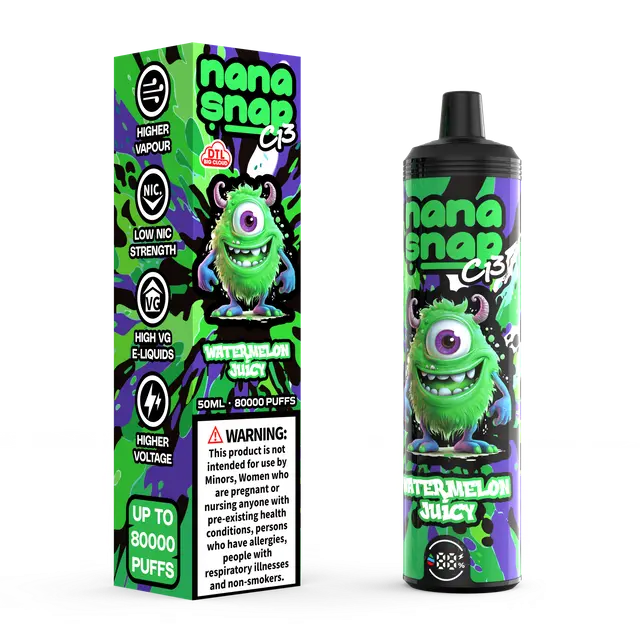
The Nanasnap C13 is positioned with 0.3% nicotine, 50ml e-liquid, dual mesh coil, adjustable power, and a built-in rechargeable 1000mAh battery. Those product features make both device documentation and e-liquid documentation relevant. A buyer should not check only the battery and forget the liquid, or check only the flavor list and ignore the charging system.
For practical due diligence, buyers should request evidence for nicotine strength, ingredient composition, batch consistency, and label accuracy. Where required by the target market or sales channel, contaminant or heavy metal testing may also be needed. Retailers and distributors may ask for more than legal minimums, so a buyer planning chain-store or multi-country sales should prepare a stronger document pack from the beginning.
ISO 9001 should be understood as a supplier reliability signal, not a market access certificate for a specific Vape model. The standard specifies requirements for establishing, maintaining, and improving a quality management system. That means it can support questions about process control, inspection, corrective actions, documentation, and customer requirement handling.
A factory with ISO 9001 still needs product-level documents for CE, RoHS, EMC, FCC, or market notification where applicable. The certificate does not prove that every device it produces can be sold in every country. Its value is different: it tells buyers whether the supplier has a structured system for producing consistent goods and dealing with defects.
For bulk orders, this matters because one good sample is not enough. Buyers need reasonable confidence that the next batch will perform like the approved sample. ISO 9001 can support that confidence when the certificate is current, issued to the actual production organization, and scoped to relevant manufacturing activities.
Weak certification claims often look convincing at first glance. A supplier may send several files, logos, screenshots, or old reports, but the buyer still needs to connect each document to the exact product being purchased. Model name, product photo, SKU version, factory name, factory address, test date, applicable standard, and destination market should all be checked.
If the report cannot be tied to the exact product being purchased, treat it as incomplete. A document for a different nicotine version, different battery size, different casing, or different model may not be enough. The same caution applies when a website says “all products certified” but the supplier cannot provide a matching file for the order.
A buyer should also compare the product description with the report scope. For example, a document covering a simple device may not automatically apply to a product with a display, adjustable power, or different charging system. Certification review is not about collecting paper; it is about confirming that the paper describes the actual product.
A valid-looking certificate can still be weak. It may be expired, issued to a trading company rather than the production factory, limited to another product category, or missing the scope needed for the buyer’s market. Date, issuing body, certificate number, accreditation status, and scope statement all deserve careful review.
Buyers should verify the certificate number where the issuing body provides a searchable database. The factory name and address should match the supplier that will produce the goods. If the certificate scope only covers general trading, packaging, or unrelated electronics, it may not support the Vape order being discussed.
Report age also matters. Components can change quickly, especially batteries, PCBA parts, displays, casings, and packaging. When the supplier says the current model uses updated materials, the buyer should ask whether the old certificate still applies or whether updated testing is needed.
The right Vape certification check starts with market fit, then moves to product-level documents, safety evidence, and supplier quality systems. CE, RoHS, EMC or FCC reports, ISO 9001 records, battery safety proof, and e-liquid documentation all become more useful when they match the exact model being purchased.
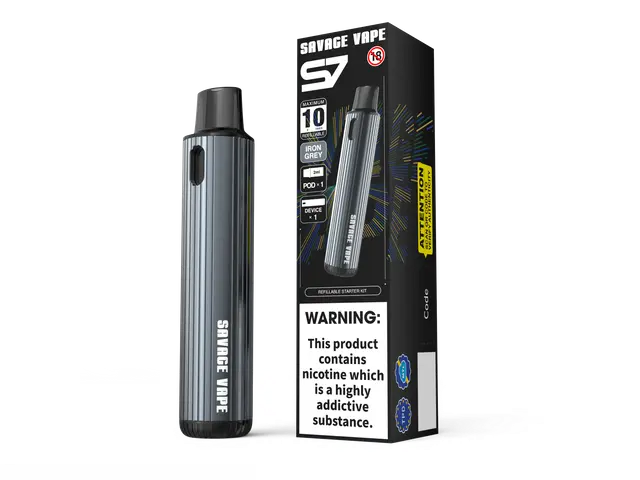
For buyers comparing high-capacity or rechargeable products, SAVAGEVAPE can support a more practical review process through model-specific product details, verification tools, and certification-related documentation. That helps buyers move beyond surface features and make sourcing decisions with fewer compliance, quality, and authenticity risks.
A: Start with market compliance, then check CE, RoHS, EMC or FCC reports, battery safety documents, e-liquid information, and ISO 9001 if supplier quality control matters.
A: No. CE covers technical compliance for the device, but buyers may also need RoHS reports, nicotine and e-liquid compliance, packaging checks, and market notification records.
A: Factory certificates, such as ISO 9001, show management and quality systems. Product certificates or reports apply to a specific model, SKU, or market requirement.
A: RoHS reports help confirm that electronic parts, soldering, casings, and battery-related components meet restricted substance requirements for electrical and electronic products.
A: Yes. Rechargeable devices should have battery and charging safety evidence, including protection against overheating, short circuits, overcharging, and transport-related battery risks.
A: Check whether each document matches the exact model, product version, factory name, test date, issuing body, and destination market before accepting the claim.